Cybersecurity has become one of the most critical priorities for businesses worldwide. As organizations increasingly rely on cloud computing, digital transformation, remote work environments, and connected technologies, cyber threats continue to grow in sophistication and frequency.
From ransomware attacks and data breaches to insider threats and compliance violations, modern businesses face significant cybersecurity risks that can impact operations, finances, and reputation.
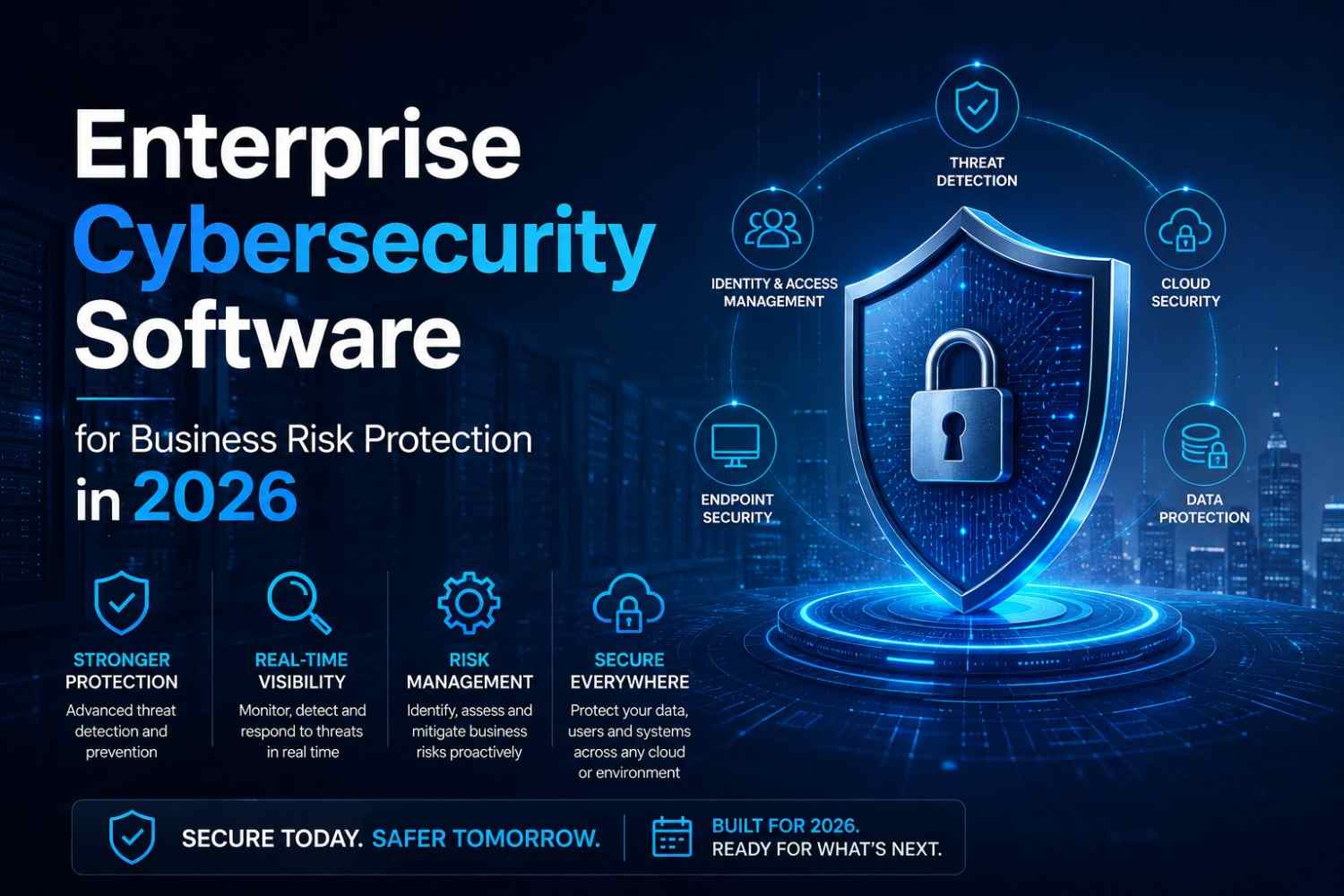
Enterprise Cybersecurity Software provides organizations with the tools needed to identify threats, protect sensitive data, ensure compliance, and maintain business continuity.
What Is Enterprise Cybersecurity Software?
Enterprise Cybersecurity Software is a comprehensive security platform designed to protect organizations against cyber threats.
These solutions help businesses monitor network activity, detect cyber threats, prevent unauthorized access, secure cloud environments, protect sensitive data, ensure regulatory compliance, and respond to security incidents.
Modern cybersecurity platforms combine artificial intelligence, threat intelligence, security analytics, and automation to provide proactive protection.
Why Cybersecurity Is a Business Priority
Cyber attacks can cause financial losses, data breaches, regulatory penalties, operational disruptions, reputation damage, and loss of customer trust. Enterprise cybersecurity software helps organizations reduce these risks while maintaining secure business operations.
Key Benefits of Enterprise Cybersecurity Software
1. Threat Detection and Prevention
Advanced cybersecurity solutions continuously monitor systems for suspicious activities, detect malware, prevent ransomware attacks, and block malicious activity.
2. Improved Compliance Management
Helps organizations comply with regulations such as GDPR, ISO 27001, SOC 2, PCI DSS, HIPAA, and NIST Cybersecurity Framework.
3. Enhanced Data Protection
Encrypts sensitive information, prevents data loss, secures cloud applications, and controls user access.
4. Business Continuity Protection
Supports disaster recovery planning, incident response, backup protection, and threat containment.
Core Components of Enterprise Cybersecurity Software
Network Security Software
Includes firewall management, intrusion detection, traffic monitoring, and threat prevention.
Cloud Security Platform
Protects SaaS applications, public cloud environments, hybrid infrastructure, and remote work environments.
Identity and Access Management (IAM)
Provides multi-factor authentication, Single Sign-On, user provisioning, and privileged access management.
Endpoint Detection and Response (EDR)
Protects laptops, workstations, servers, and mobile devices with real-time threat detection and response.
AI and Automation in Cybersecurity
AI-powered cybersecurity solutions can detect anomalies, identify attack patterns, predict cyber risks, automate incident response, and improve threat intelligence.
Cybersecurity Trends for 2026
- AI-Powered Security Operations
- Zero Trust Adoption
- Cloud-Native Security
- Cybersecurity Automation
- Regulatory Compliance Growth
Frequently Asked Questions
What is Enterprise Cybersecurity Software?
Enterprise Cybersecurity Software protects organizations against cyber threats while supporting compliance, risk management, and business continuity.
What is Zero Trust Security?
Zero Trust is a security framework that continuously verifies users and devices before granting access.
Why is cybersecurity important for businesses?
Cybersecurity helps prevent data breaches, financial losses, operational disruptions, and regulatory penalties.
Conclusion
Enterprise Cybersecurity Software has become a mission-critical investment for modern organizations operating in increasingly complex digital environments.
By combining cyber risk management, cloud security, threat intelligence, compliance automation, AI-powered analytics, and Zero Trust architecture, businesses can strengthen their security posture and reduce risk exposure.
As cyber threats continue evolving throughout 2026 and beyond, organizations that invest in advanced cybersecurity solutions will be better positioned to protect their assets, maintain compliance, and ensure long-term business resilience.